Delhi-Guwahati Bullet Train Corridor Gets Approval
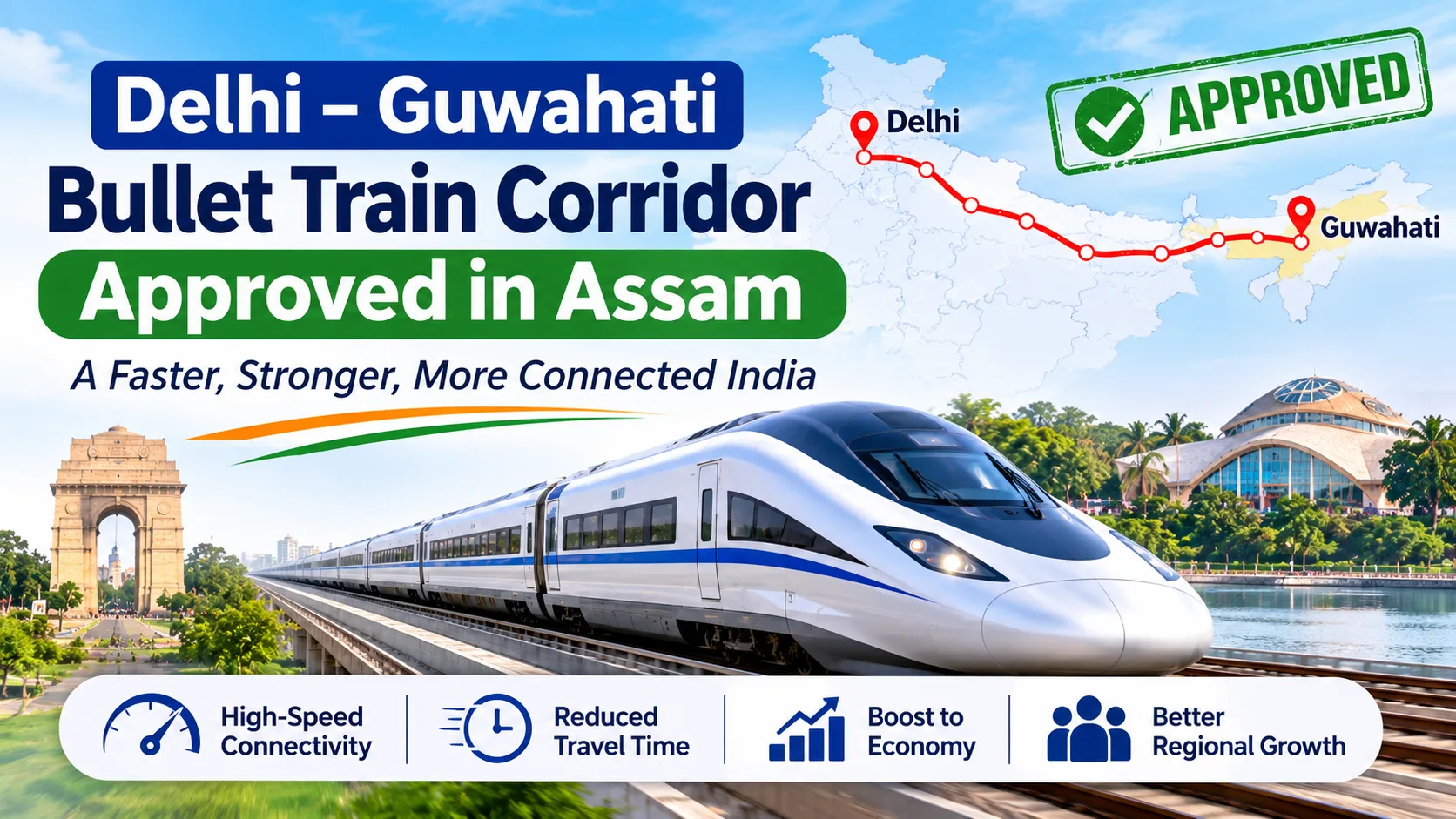
A proposed bullet train corridor connecting Delhi with Guwahati has been approved, bringing high-speed rail plans to Assam for the first time, according to Metro Rail News. The route of about 1,500 km would run through the Gangetic plains and Siliguri before reaching Guwahati. Assam Chief Minister Himanta Biswa Sarma has welcomed the decision.
The approval was announced by the Railway Minister, according to the report. The extension to Guwahati follows a request the chief minister made in July 2026.
Key Developments#
Metro Rail News reports that the corridor has received approval. It would link the national capital with the largest city in Assam, and planners say it would sharply cut travel times across northern and eastern India.
The main details reported so far:
- Length: About 1,500 km from Delhi to Guwahati.
- Major stops on the route: Agra, Kanpur, Lucknow, Ayodhya, Varanasi, Patna and Siliguri.
- States covered: Uttar Pradesh, Bihar, West Bengal and Assam, in addition to the Delhi end of the line.
- Travel time: The Delhi to Siliguri journey is expected to drop from about 20 hours to about 6 hours.
- Fares: Tickets have been promised to cost less than air fares.
- Cost and schedule: No project cost, financing model or construction timeline has been disclosed.
The report gives a projected travel time only for the Delhi to Siliguri section. It does not give an estimate for the full run to Guwahati.
The Assam Extension#
According to Metro Rail News, Chief Minister Himanta Biswa Sarma said he had asked in July 2026 for the corridor to be extended beyond Siliguri to Guwahati. His welcome of the approval suggests the state government sees the extension as a response to that request.
Siliguri is the gateway between the rest of India and the northeastern states. A high-speed link that stops there would have left Assam dependent on conventional rail, road or air for the last leg. Taking the line on to Guwahati would put the northeast's main urban centre directly on the corridor.
The report does not say how many stations are planned in Assam, which alignment the line would follow between Siliguri and Guwahati, or whether any further extension within the region is being considered.
Context and Background#
The route passes through several cities that have, or are developing, urban rail systems. Metro Rail News links the story to the Delhi, Lucknow and Kanpur metro networks, among others. Kanpur, Lucknow and Delhi all sit on or at the end of the proposed alignment.
The corridor would also serve Ayodhya and Varanasi, two major pilgrimage and tourism centres in Uttar Pradesh, and Patna, the capital of Bihar. Together, the listed stops cover a densely populated belt of north and east India.
The report does not describe how the corridor fits into India's wider high-speed rail plans. It also does not say which agency would build or operate the line. These points should be confirmed with the Ministry of Railways or the relevant implementing body.
What It Means for Riders#
If the corridor is built as described, the clearest benefit for travellers would be time. Cutting the Delhi to Siliguri trip from about 20 hours to about 6 hours would turn an overnight or longer journey into one that could be made within a working day.
The promise of fares below air tickets could make the train attractive to people who now fly between these cities, as well as to those who take long-distance trains because flights cost too much. Exact fares, and how they would compare with conventional rail classes, have not been announced.
For cities such as Lucknow, Kanpur and Delhi, a high-speed station could increase demand for metro and other last-mile connections. Whether stations would be integrated with existing metro networks has not been reported. That will be a key question for urban transport planners as details emerge.
For Assam and the wider northeast, the corridor could strengthen links with the Gangetic plains and the national capital. The scale of any economic or tourism impact will depend on the final alignment, station locations, timelines and fares.
What Remains Unclear#
The approval is only the first step. According to Metro Rail News, no cost estimate, financing arrangement or construction schedule has been made public. Projects of this size usually involve detailed surveys, land acquisition and environmental and technical clearances before construction begins. None of these stages has been reported for this corridor.
Readers should treat the projected travel times and fare promises as stated aims rather than confirmed outcomes until official project documents are released.
Conclusion#
The approval of a Delhi to Guwahati bullet train corridor through Siliguri marks a notable step for high-speed rail ambitions in north and east India. It also answers Assam's request for the line to reach Guwahati. The reported benefits are a roughly 1,500 km route across four states, a sharply shorter Delhi to Siliguri journey and fares below air tickets. The most important questions remain open: cost, financing and when the trains might run. Further announcements from the Railway Ministry will determine how quickly the corridor moves from approval to construction.